“The Great Flood” A New Korean Film That Implies Science in Disasters
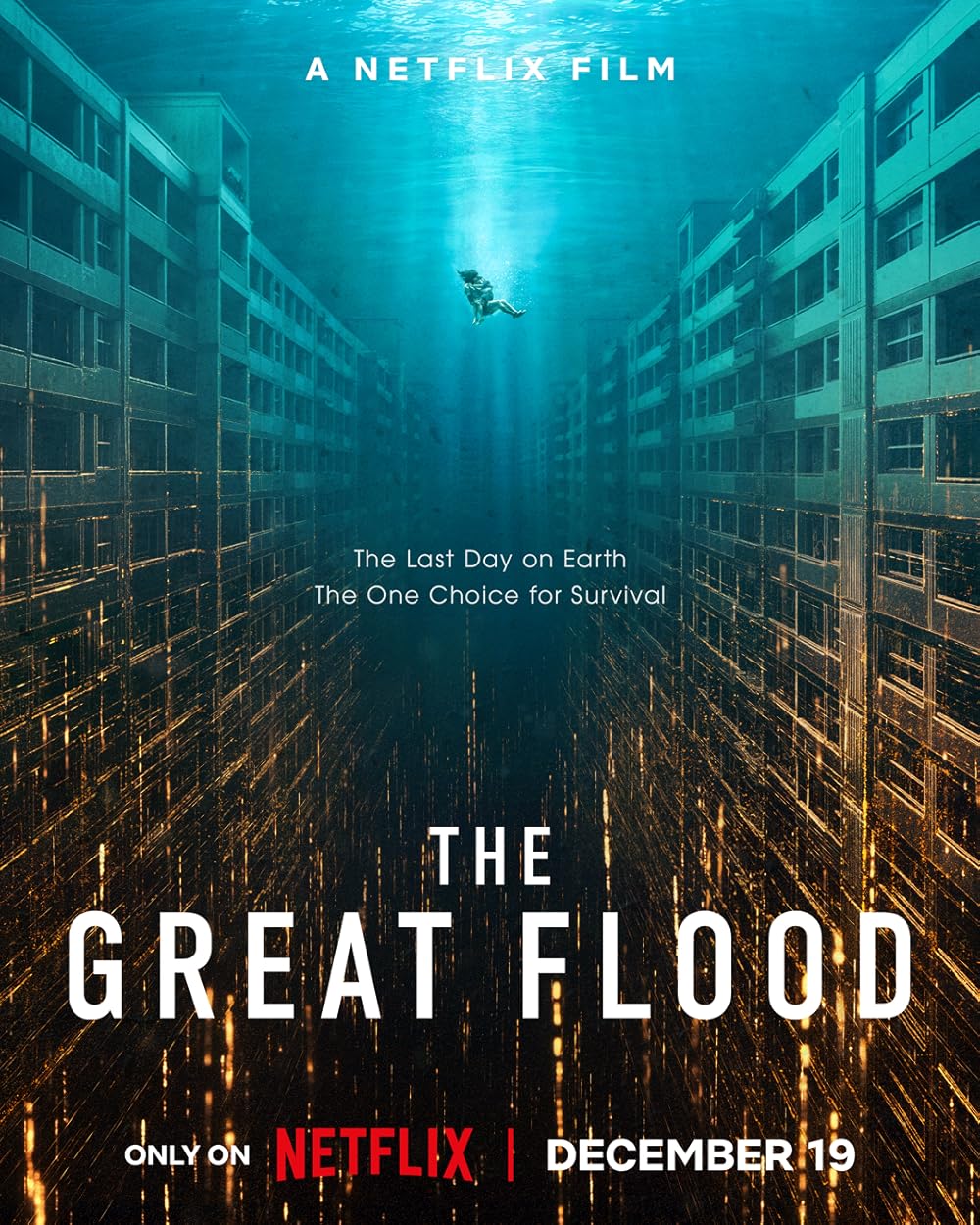
“The Great Flood” is a South Korean sci-fi disaster film directed by Kim Byung-woo and co-written by Han Ji-su. It will be released on Netflix starting December 19, 2025, after premiering at the Busan International Film Festival on September 18, 2025. The story revolves around a massive flood that hits Earth. The main character, Anna (Kim Da-mi), an artificial intelligence (AI) researcher, and her son are trapped in a nearly submerged apartment. Hee-Jo (Park Hae-soo), a member of the security team, attempts to rescue Anna and her son, while it is revealed that there is a major mission related to the “future of humanity” behind this rescue effort.
🔬Relation to Science Material
This film
touches on various scientific concepts and contemporary issues that can be used
as learning material. Here are some points it can highlight:
|
Science
Material |
Explanation
based on the film |
Educational
Opportunities |
|
Climate
change & extreme weather cycles |
The
film depicts global flooding as a result of extreme rainfall and rising sea
levels in densely populated countries. This is highly relevant to studies of
the greenhouse effect, global warming, and extreme weather patterns resulting
from global warming. |
It can
be used in learning about the impacts of global warming, adaptation to
natural disaster mitigation, and the importance of actions to reduce CO₂
emissions. |
|
Hydrology
and flood dynamics |
How
water rises into buildings, infiltration into normally dry spaces, water
pressure on structures. |
Physics
(fluid pressure), geography (surface currents, drainage), and civil
engineering (building resistance to flooding). |
|
Artificial
intelligence (AI) |
Anna's
character is an AI researcher. The film could explore how AI is used in
disaster prediction, evacuation coordination, or weather monitoring systems. |
It can
be used as a case study of how AI & modern technology can help with
disaster mitigation, risk mapping, early warning systems. |
|
Psychology
& human emergency response |
This
film shows how humans react in extreme situations: fear, moral decisions
(e.g., saving yourself vs saving others), and solidarity. |
It can
be studied in the context of disaster psychology, ethics, social studies, and
even in science classes related to the impact of the environment on society. |
🌍Relevance to Global Issues
- Climate change: The phenomenon of massive
flooding like in movies is becoming more common in the real world—storms,
extreme rainfall, rising sea levels. This film brings these issues into a
dramatic yet awareness-raising context.
- Resilience and risk
mitigation:
How communities and infrastructure can be prepared for natural disasters,
including drainage systems, mapping flood-prone areas, and coordinating
emergency responses. The film illustrates the consequences if mitigation
is not carried out adequately.
- Technology as part of the
solution:
Since the main character is an AI researcher, this opens up the
possibility that the film could explore technology (weather sensors,
computer modeling, predictive AI, data-driven evacuation, etc.) as part of
how to deal with climate change and natural disasters.
📚Potential Use for Education
- Class discussion: Teachers can show a
trailer or film clip, then invite students to discuss the scientific
aspects involved: is such a global flood possible? What factors might
cause it? How might mitigation work?
- Small research project: For example, students can
research case studies of major floods in Indonesia or other places,
comparing them with scenarios in films: rainfall, drainage systems,
geographical conditions, city planning.
- Interdisciplinary: This film can be used in
science classes (focusing on natural science and its impact), social
classes, sustainable development, even moral/ethical education about
sacrifice and humanity.
