Gold Prices Today: The Science Behind the Precious Metal
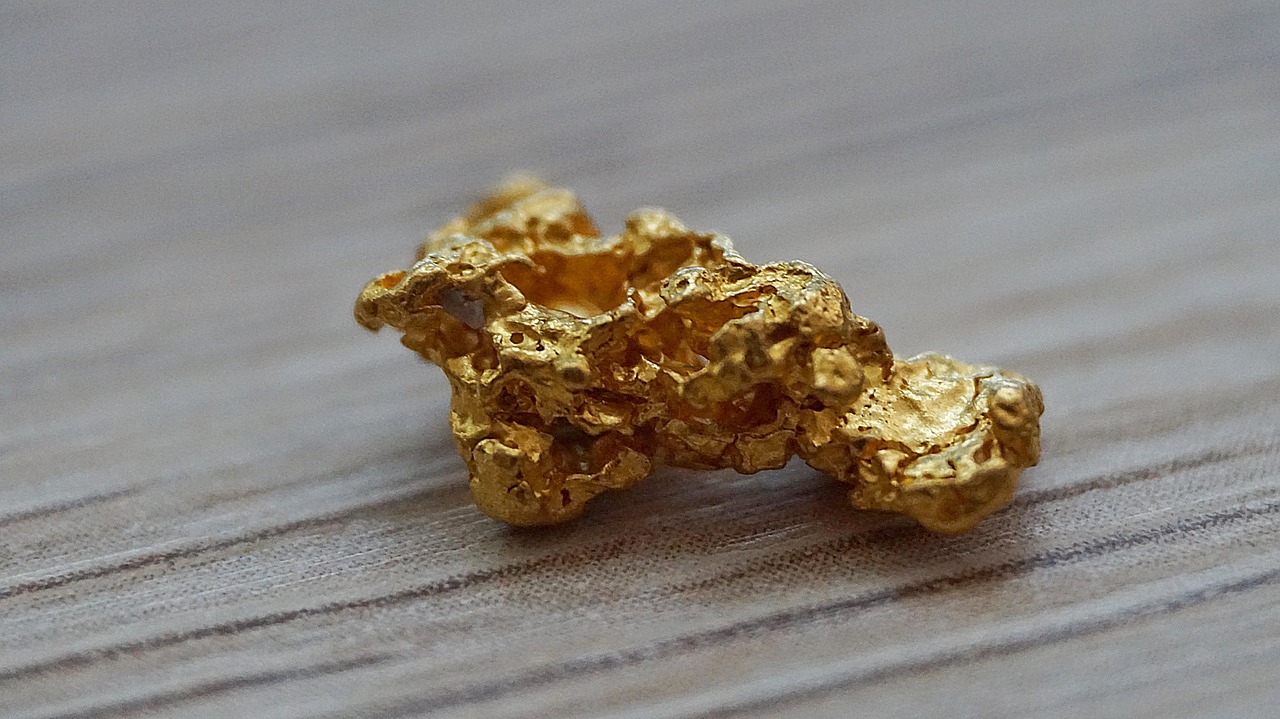
Indonesia is a country blessed with abundant mineral resources, including gold (Au), a metal with significant economic value (Ariyanti & Syaifuddin, 2019). The price of gold often attracts public attention, both as an investment and as a form of long-term savings. Yet, behind the numbers we see in the market, this precious metal carries fascinating stories when viewed through the lens of science. From its cosmic origins to its role in modern technology, gold is not only a symbol of wealth but also a remarkable testament to the wonders of scientific discovery.
1. Why Is Gold Price Stable? Secrets of the Atomic World
One of the main reasons gold is highly valued lies in its unique chemical properties. Gold (Au) has an atomic number of 79 with a very stable electron configuration. This stability prevents it from rusting or reacting easily with air. In science, this property has earned gold the nickname “eternal metal.” No wonder its price tends to remain more stable than that of other metals.
2. The Origin of Gold: From Stellar Explosions to Earth
Astrophysical research shows that gold was formed through supernova explosions or neutron star collisions billions of years ago. Thus, the gold we buy in jewelry stores today is, in essence, “stardust.” This scientific fact makes gold valuable not only economically but also cosmically.
Gold is not a metal native to Earth. Studies indicate that it was created far away in space during rare cosmic events such as supernovae—massive explosions occurring when stars run out of fuel. In those brief yet powerful moments, nuclear reactions forged heavy elements, including gold, which were then scattered across the universe.
The gold particles produced by such stellar explosions later contributed to the formation of our solar system. When Earth formed around 4.5 billion years ago, traces of cosmic dust containing gold became part of its crust. Geological processes—such as magma movement and hydrothermal activity—further concentrated gold in certain locations, where it has since been mined and refined into jewelry, electronics, and modern necessities.
Interestingly, when Earth was young, much of its original gold sank into the core due to its density. Scientists believe that the gold we find in the crust today likely arrived later during the “Late Heavy Bombardment,” a period when meteorites carrying precious metals struck the early Earth. This explains why gold is extremely scarce in Earth’s crust—only about 4 parts per billion.
3. Geological Rarity: A Key Factor Shaping Gold Prices
Gold deposits in the Earth’s crust are the result of complex geological processes that span millions of years. Primary gold deposits usually form through hydrothermal activity. Hot fluids, often driven by volcanic processes, dissolve gold and other minerals. When these mineral-rich fluids seep through rock fractures, changes in temperature and pressure cause gold to precipitate, forming veins or lodes.
Over time, these primary deposits undergo weathering. Because of its dense and chemically inert nature, gold particles endure while other minerals break down. Rivers and erosion then transport and concentrate the particles into secondary (placer) deposits—explaining why many historic gold discoveries occurred along riverbanks.
Tectonic plate movements also play a major role in distributing gold. Shifting and colliding plates create conditions favorable for hydrothermal activity and provide pathways for gold-bearing fluids to rise toward the surface. It is no coincidence that regions along the Pacific “Ring of Fire” host some of the world’s largest gold mines.
4. Gold in Science and Modern Technology
For centuries, gold has been celebrated as a symbol of beauty and wealth. Yet beyond its aesthetic value, gold plays a vital role in science and modern technology thanks to its unique physical and chemical characteristics.
-
Electronics: Gold is an excellent conductor of electricity and heat, resistant to corrosion. This makes it essential in manufacturing components for smartphones, laptops, computers, and even advanced medical devices. In tiny devices like smartphones, gold ensures signal quality in connectors, processors, and circuits. As digital technology advances, the demand for gold in electronics continues to grow.
-
Medicine: In healthcare, gold appears in the form of nanoparticles, small enough to interact with human cells. Gold nanoparticles are used in cancer therapy, disease detection, and targeted drug delivery. Recent research also highlights their role in biosensors for rapid virus detection. Thus, gold is not just ornamental—it actively contributes to saving lives.
-
Energy and Environment: Scientists now harness gold as a catalyst for eco-friendly chemical reactions. Nanogold plays a role in waste treatment, energy storage, and clean fuel production, making it a key material in the transition toward sustainable green technologies.
-
Space Exploration: Gold also protects humanity’s ventures into space. NASA coats satellites and spacecraft with thin layers of gold to reflect solar radiation and regulate temperature. Even astronauts’ helmets feature gold visors to shield their eyes from ultraviolet rays. In this way, gold safeguards life on Earth and supports humankind’s reach into the cosmos.
5. The Future of Gold Prices and New Discoveries
Looking ahead, the future of gold may prove even more intriguing than its past. A mix of limited natural reserves, technological innovation, and space exploration could reshape its value and role on a global scale.
-
Asteroid Mining: Scientists estimate that asteroids hold vast reserves of gold. If space-mining technology becomes viable, extraterrestrial gold could dramatically increase global supply. This might lower prices due to abundance—or raise them, given the high cost of extraction.
-
Material Innovation: Demand for gold is expected to rise with advances in nanotechnology, electronics, energy, and healthcare. It may become indispensable for next-generation computer chips, smart medical devices, or renewable energy catalysts.
-
Scarcity of Earth’s Reserves: On the other hand, terrestrial gold reserves are harder to find and more expensive to mine. Unless space exploration succeeds, scarcity will likely drive prices higher year by year.
-
Geopolitics and Investment: Gold will remain a safe-haven asset during economic crises and global uncertainties. Its price will continue to be shaped not only by supply and demand but also by geopolitics, inflation, and global monetary policy.
